Engineering Out Silica Hazards
Words: Zach EverettPhoto Credits: Ben185, Milwaukee Tool, Hilti Tool
In recent months, we have addressed the dangers of silica exposure. Unfortunately, we often think of protection from silica in the form of PPE. Suppose there's silica; put on a respirator. This should be the last resort. If there is airborne respirable silica, then there is the potential for exposure even with a respirator. What if the respirator doesn't fit correctly? What if someone's respirator hasn't been cleaned properly? What if someone comes into the area without proper PPE? There are myriad ways that having airborne respirable silica in a workplace can still do deadly damage. A much better way to protect against silica is to never have airborne respirable silica in the first place. This can be accomplished by engineering controls. When it comes to respirable crystalline silica, there are two major forms of engineering controls: wet methods and vacuum systems. In both cases, you are engineering the exposure to airborne silica out of the worker's breathing zone. Let's consider both.
Wet Cutting Silica-Containing Materials
Using wet methods to eliminate airborne silica is my preferred form of engineering control. Take a saw with a blade, for example. It saw cuts into a piece of granite. Even at a distance, you can see the quarts or crystalline elements of the granite at a glance. The blade of our saw begins shaving these crystalline particles into respirable dust and jettisons it into the atmosphere. This is a very dangerous scenario for prolonged exposure. Take the same tool and add an integral water suppression system into the cutting portion of the blade at the point that it contacts the granite. Now, the cutting area is saturated with water, and all the silica dust is immediately saturated and flows with the water by gravity out of the hazardous scenario. No airborne respirable silica enters the air. Therefore, the worker can continue using his water-generating saw as an engineering control to eliminate the exposure of respirable crystalline silica. This water suppression system, in recent years, has made its way onto just about every type of masonry saw. Handsaws of various blade sizes, table saws of every blade size, polishers, and grinders.
Vacuum systems for Silica Protection
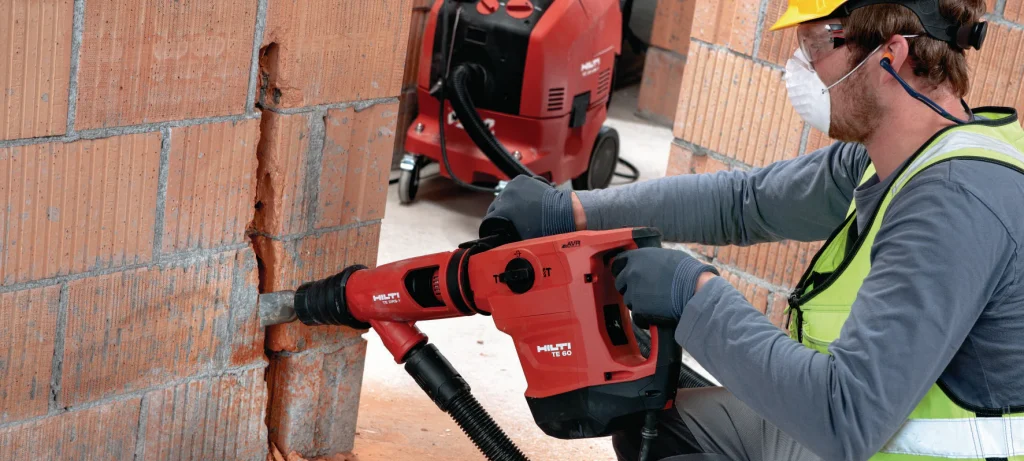
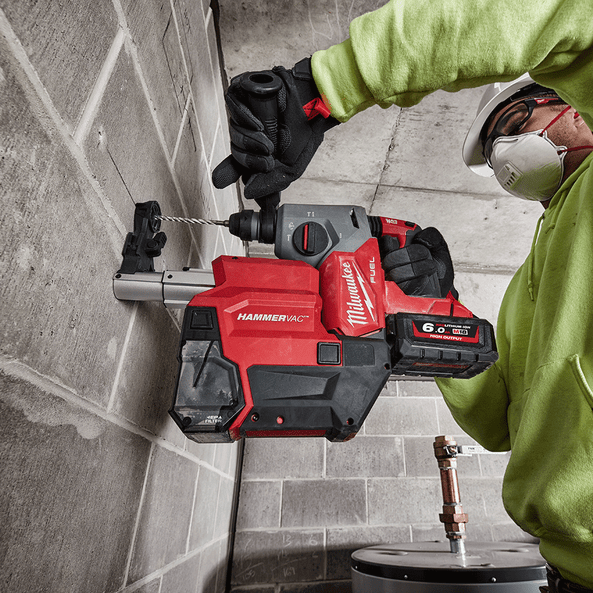
Especially since the silica standard came out several years ago, vacuum systems have made great strides in the masonry industry. Saws, drills, boring, and breaking equipment have introduced vacuum systems at the point of silica generation. Some table saws have vacuums that are placed above the shroud, and some table saws suck the silica into the lower table. Drills and boring equipment often have a tubular shroud down around the bit area, pulling the silica from the point of generation through HEPA filters. Some drill manufacturers have introduced hollow drill bits that vacuum up through the drill bit itself rather than a shroud draping over the bit. Each design is a viable option for silica protection while drilling or boring. One thing to keep in mind is how your written plan defines your way of compliance. If a contractor chooses to follow OSHA's Table 1 (CFR 1926.1155, where OSHA defines the protections for each specific piece of equipment that you're using), OSHA has very detailed information on how to use each piece of equipment, whether the work is done inside or outside, and if a respirator will be needed in certain situations. Each contractor would be responsible for studying and applying Table 1 if they choose to go that way. The other option is following a monitored scenario. To make it as simple as possible, the contractor would have to have industrial hygienic data proving that their workers' exact scenario has been monitored and the results prove that the airborne silica content is below the Permissible Exposure Level (PEL).
Final Words
Complying with OSHA standards is a good reason to invest in the proper equipment and training to engineer silica out of your workplace. However, the much greater and more satisfying reason is to know that you are protecting your workers from a potentially deadly disease called silicosis. Depending on the concentrations, a worker can suffer from acute silicosis or chronic silicosis. Acute silicosis is, of course, such high volumes of silica in a short amount of time that the worker will start showing respiratory distress quickly. Chronic silicosis probably hits a little closer to home for those of us in the masonry trade. A worker who is not given the proper engineering controls (or PPE) may be exposed to silica and small amounts over many years and then begin to show irreversible respiratory distress. This is the last thing we all want. That is why we, as an industry, have fully embraced protecting our workers by using engineering controls and equipment that will do away with this airborne danger. Ensure you, your supervisors, and your workers are doing it right. Invest in the right equipment for the right job. Follow the manufacturer's recommendations. Don't bypass the water or vacuum system, even if it makes the job a little harder or longer. Stay educated. Stay in close contact with your equipment salespeople and manufacturers so you can stay on the cutting edge of new equipment coming out that may protect your workers better than the tools you've been using. Silica is a naturally occurring element that is not going away in building materials. However, airborne respirable silica can go away if we use the proper equipment and engineer it out of our jobs.
References
Occupational Safety and Health Administration (OSHA). Silica. Retrieved February 22, 2018, from https://www.osha.gov/dsg/topics/silicacrystalline/gi_maritime.html