Cummer Masonry, Inc.
Words: Tom CummerMCAA: Tell us about the history of your company.
Tom Cummer: I started out working for a couple different masonry companies while I was still in school. After I graduated from high school in 1985, I went to work full-time in the masonry field. In 1988, one other person and I formed a partnership to do masonry construction. In 1994, I bought out my partner’s half of the business and started masonry work on residential projects. At this time, I performed all of the work completely by myself. Shortly after this I started hiring employees. With the help of dedicated, hard working employees, we have grown ever since, keeping in mind that quality work and customer service is always our number one priority.
In the middle 2000’s, we started up a masonry construction equipment manufacturing division, Push Button Masonry. All of our equipment is designed to save on labor and reduce fatigue. As we were just getting up and running with new masonry equipment to the market, the economy decided to take a turn for the worst, so we shut this part of our company down as we decided we could not sell new-to-the-market equipment to companies that were laying off employees. At the present time, we are bringing back the manufacturing division and plan to start marketing the masonry equipment again.
MCAA: What do you think has been the key to your company’s success?
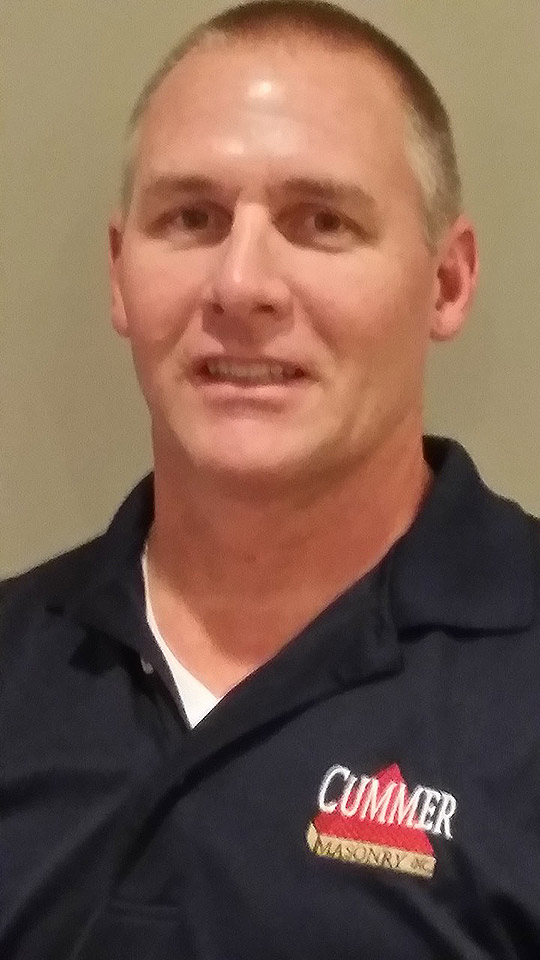
Tom Cummer
Cummer: Hard work and customer satisfaction. We do a lot for our customers to keep them happy even if it costs us some money to do so, and I see this as inexpensive advertising. We have great employees who show up to work as a team, get the job done for our customers and give our customers what they are looking for. Another benefit to our company is continuing education in the construction and masonry industry.
MCAA: What advice would you offer a budding mason contractor?
Cummer: Get as much education and training as possible in all categories of running a business. There are so many construction companies out there that just bid “willy nilly†and don’t really understand what they should be bidding. The other advice I would give is to get good employees that want to work as a team to keep a good attitude throughout the company. Everyone needs to be working for the same goal.
MCAA: What do you feel is the masonry industry’s biggest challenge in the future?
Cummer: Finding good quality employees who are willing to do the work. Another challenge is all of the rules and regulations forced on us.
MCAA: What is your favorite aspect of being a member of the MCAA?
Cummer: I feel the MCAA is an organization that is truly trying to move the masonry industry forward. The MCAA does a lot to keep the masonry industry up-to-date and stay competitive with the other options for construction that are out there. The MCAA is trying to stay on top of all the rules and regulations that seem to get put on all of us and keep us informed of them. One thing I would like to see us get out there is the importance of the certification program and push it onto the architects how important it is. Another great thing about the MCAA is all of the training they have readily available on the website. We can bring our employees in at any time and have training sessions.